
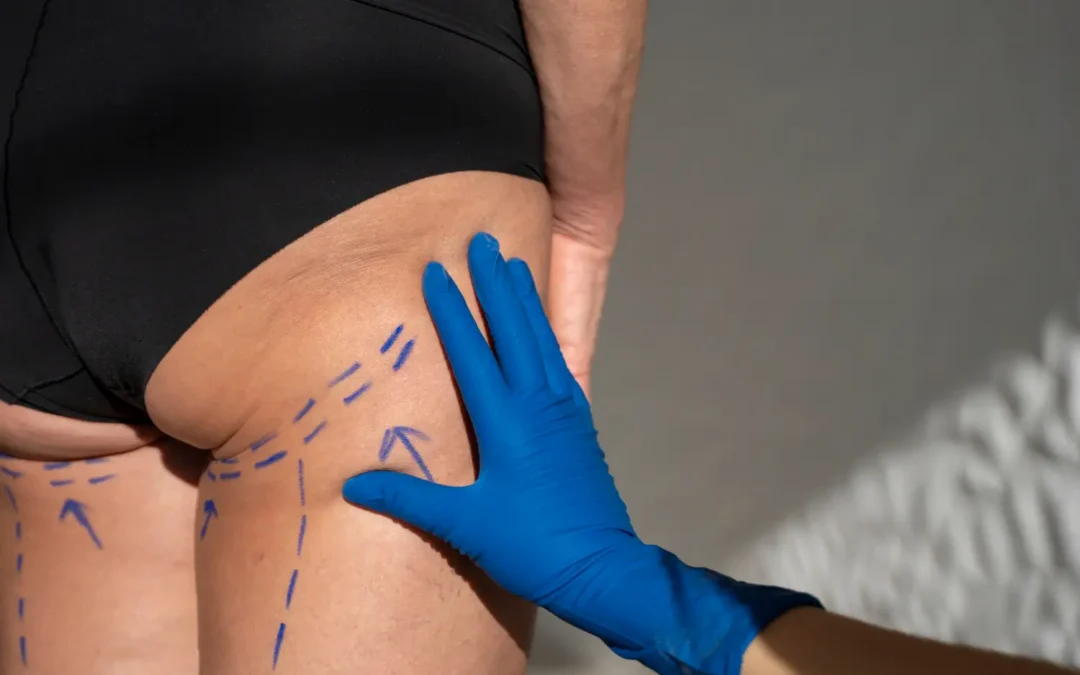
Hip dips are one of the most searched body concerns on social media, and the treatment questions that follow them have shifted significantly in recent years. Where the conversation once centered almost entirely on surgical options, a growing number of patients are arriving at consultations asking specifically about Sculptra hip dips as a non-surgical alternative. The interest is well-founded, but it comes with a fair amount of misinformation about what Sculptra can actually do in this area, how long it takes to see a result, and what that result realistically looks like.
This post covers the clinical mechanics of Sculptra for hip dips, what the treatment process involves, and what the results timeline looks like from the first appointment through the months that follow. If you are researching this treatment in Miami and want a clear, honest picture of what to expect, this is where to start.
What Hip Dips Actually Are and Why They Are Not a Flaw to Fix
Hip dips, also called trochanteric depressions, are the inward curves that appear on the outer thigh just below the hip bone. They occur where the greater trochanter of the femur sits slightly inward relative to the hip bone above and the thigh below, creating a concavity in the silhouette when viewed from the front or at an angle. The degree of hip dip visibility varies significantly from person to person and is determined primarily by skeletal structure, not body fat percentage or muscle development.
This distinction matters because it sets the correct expectations for any treatment. Hip dips that are driven by bone structure cannot be eliminated. No injectable, surgical procedure, or lifestyle change alters the underlying skeleton. What Sculptra hip dips treatment addresses is the soft tissue volume in the depression itself. By adding volume to the concave area, the treatment softens the appearance of the indentation and creates a smoother, more continuous lateral silhouette. It does not create a different body shape. It refines the contour within the shape you already have.
Patients who come to a consultation with that understanding tend to be the most satisfied with their results.
What Sculptra Is and Why It Works Differently Than Filler
Sculptra is an injectable biostimulator made from poly-L-lactic acid, a synthetic substance that has been used in medical applications for decades. It is not a traditional dermal filler in the sense that it does not add immediate volume at the injection site. What it does instead is stimulate the body’s own collagen production in the treated area over time. The poly-L-lactic acid particles are gradually absorbed by the body, and during that absorption process they trigger a fibrotic response that produces new collagen in the surrounding tissue. That new collagen is what creates the volume and structural improvement that patients see in their results.
This mechanism is why Sculptra hip dips treatment produces a different kind of result than hyaluronic acid fillers do. Traditional fillers add volume immediately and that volume is visible right away. Sculptra results build progressively over weeks and months as collagen production develops and matures. The tradeoff is that the result takes longer to appear, but the benefit is that the outcome looks and feels like natural tissue rather than a material that has been injected. For body areas like the hips where a natural, soft result is the goal, this distinction is clinically meaningful.
How Sculptra for Hip Dips Works: The Treatment Process
Sculptra for hip dips is an in-office procedure that most patients complete across two to three sessions spaced several weeks apart. Here is what the process looks like from consultation through completion.
The Consultation
A thorough consultation before Sculptra hip dips treatment serves two purposes. The first is to confirm that the patient is an appropriate candidate, meaning that their concern is driven by soft tissue volume deficit in the lateral hip area rather than expectations that fall outside what the treatment can deliver. The second is to plan the volume distribution and vial count required to achieve the patient’s aesthetic goal. Hip dip correction typically requires more product than facial Sculptra applications, and the number of vials needed varies significantly based on the depth of the depression, the patient’s anatomy, and the degree of correction being pursued.
This is also the appointment where the provider discusses what the results will and will not look like, what the timeline involves, and what the Sculptra aftercare protocol requires. Patients who arrive at their injection appointment already understanding the process tend to have a smoother treatment experience.
The Injection Appointment
Sculptra is reconstituted with sterile water and lidocaine before injection, which both prepares the product for use and reduces discomfort during the procedure. The lateral hip area is marked, a topical numbing agent may be applied depending on the patient’s preference, and the product is injected in a series of passes using a cannula or needle depending on the provider’s technique and the specific area being addressed.
The appointment itself is typically brief, ranging from 30 to 60 minutes for both hips. Patients experience some pressure and mild discomfort during injection but the procedure is well-tolerated by most. Immediately after, the treatment area is massaged to distribute the product evenly. This massage step is important for uniform results and is something the patient will continue at home in the days following treatment.
The Aftercare Protocol
Sculptra aftercare for hip dips follows the widely used five-five-five rule: massage the treated area for five minutes, five times a day, for five days after each session. This protocol helps ensure the product distributes evenly in the tissue and reduces the risk of nodule formation, which is one of the more common complications associated with Sculptra when post-treatment massage is not performed consistently.
In addition to massage, patients are advised to avoid strenuous activity for 24 to 48 hours, avoid direct heat sources including saunas and hot tubs for the first day or two, and stay well hydrated. There is no extended downtime associated with Sculptra hip dips treatment. Most patients return to normal daily activity the same day or the following morning.
Sculptra Results Week by Week: What the Timeline Actually Looks Like
The Sculptra results timeline is one of the most important things to understand before committing to this treatment, because the gap between the injection appointment and the visible result is longer than many patients initially expect. Here is a realistic, week-by-week picture of what to anticipate.
Immediately After Treatment
The treated area will appear slightly fuller immediately after the injection. This initial volume is not the Sculptra result. It is the water content of the reconstituted product, which will absorb over the following days. Patients who mistake this initial swelling for their final outcome are often surprised when it fades in the first week. This is expected and is part of how the treatment works.
There may be mild bruising, swelling, and tenderness at the injection sites. These typically resolve within a few days to one week.
Week One to Two
The immediate water-based volume has largely resolved. The lateral hip area may look similar to or slightly fuller than the pre-treatment baseline, but the Sculptra-driven collagen response has not yet produced visible change. Patients should continue the massage protocol through day five and maintain their regular hydration and activity level. This is the waiting period and it requires patience.
Week Three to Four
This is typically the earliest stage at which some patients begin to notice a subtle change. Sculptra results after 4 weeks are not the final outcome, but early softening of the hip dip contour may be visible in some patients, particularly those with less pronounced depressions or who metabolize the product efficiently. For others, the four-week mark still looks close to baseline. Both are within the expected range.
The variation at this stage is why Sculptra results week by week look different from patient to patient. Individual collagen production rates, product distribution, the depth of the original depression, and the number of vials used all influence when changes become visible.
Week Six to Eight
By six to eight weeks after the first session, more patients are seeing a meaningful change in the contour of the hip area. The collagen response is underway and the treated tissue is beginning to thicken and fill in. For patients completing their second session during this window, the combination of ongoing results from session one and the collagen stimulus from session two begins to build toward the fuller result.
Month Two to Three
This is often the most visible change window for patients who are mid-series or who have completed their sessions. The cumulative collagen production from one or two treatment rounds is maturing, the depression in the lateral hip area is visibly softer, and the lateral silhouette reads as more continuous and rounded when viewed from the front. Patients often share comparison photos at this stage and describe the result as looking natural rather than treated.
Sculptra results after 4 weeks may have been subtle, but the two-to-three-month mark is typically where the treatment earns its patient satisfaction.
Month Three to Six
Collagen remodeling continues through this window. Patients who have completed their planned series see their results continue to develop and settle. The final outcome of a Sculptra hip dips series is most accurately assessed at the three-to-six-month mark, when collagen production has matured and the full structural change is visible.
Results from Sculptra are not permanent, but they are long-lasting. Most patients see their results hold for two or more years before a maintenance session becomes appropriate.
How Many Sessions Are Needed and How Much Product
The number of Sculptra sessions needed for hip dips varies based on the depth of the depression, the patient’s anatomy, and the degree of correction being pursued. Most patients complete two to three sessions spaced six to eight weeks apart. Each session allows the collagen response from the previous round to develop before adding the next stimulus.
Vial count is similarly variable. Hip dip correction typically requires more product than facial applications. A conservative estimate is two to four vials per session depending on the area, though some patients with deeper depressions or larger lateral hip areas require more. The consultation is where an accurate vial estimate is established based on your individual anatomy and goals.
What Sculptra for Hip Dips Cannot Do
Sculptra for hip dips produces meaningful contouring results for the right patient, but it has limits that are worth stating clearly.
It cannot change bone structure. Patients with a very pronounced trochanteric depression driven primarily by skeletal anatomy will see a softer contour but not the fully rounded hip profile they may have seen in edited social media images. Sculptra adds volume to the soft tissue. It does not alter the underlying frame.
It cannot produce immediate results. Patients who need a result for an event in the next four to six weeks are not good candidates for timing their Sculptra treatment. The collagen response takes time, and trying to compress that timeline leads to disappointment.
It is not a weight loss or body contouring treatment in the traditional sense. Sculptra adds structural volume. It is not designed to reduce fat, tighten loose skin, or reshape areas beyond the specific depression being addressed.
What White Coat Glam Recommends for Patients Considering Sculptra Hip Dips
At White Coat Glam, patients considering Sculptra for hip dips receive a consultation that focuses first on anatomy. Not every hip dip is the same, not every patient is the same candidate, and not every result expectation is achievable with this treatment. The consultation is where those variables are assessed honestly and where a realistic treatment plan is built around what is actually achievable for the individual patient’s body.
For patients who are appropriate candidates, Sculptra hip dips treatment represents one of the most natural-feeling, low-downtime options available for lateral hip contouring. The results are gradual, which some patients initially find frustrating, but the outcome at three to six months consistently reflects what patients came in hoping to achieve.
If you are in Miami and want to understand whether Sculptra for hip dips is the right approach for your specific anatomy and goals, book a consultation at White Coat Glam. The conversation starts with your body, your goals, and an honest picture of what this treatment can and cannot deliver for you.
FAQs
Does Sculptra work for hip dips?
Sculptra can produce meaningful improvement in the appearance of hip dips by stimulating collagen production in the soft tissue of the lateral hip area. It softens the concave contour and creates a smoother lateral silhouette. It works best for patients whose hip dips are driven by soft tissue volume deficit rather than purely skeletal anatomy.
How many vials of Sculptra are needed for hip dips?
Vial count varies based on the depth of the depression, the patient’s body size, and the degree of correction being pursued. Most patients require two to four vials per session across two to three sessions. An accurate estimate is established during the consultation after assessing your specific anatomy.
What do Sculptra results look like after 4 weeks?
Sculptra results after 4 weeks are typically early and subtle. Some patients notice a slight softening of the hip dip contour by this point, while others are still close to their pre-treatment baseline. The most visible and meaningful changes typically appear at two to three months as collagen production matures.
How long do Sculptra hip dips results last?
Results from Sculptra are long-lasting rather than permanent. Most patients see their results hold for two or more years before a maintenance session is appropriate. Individual longevity varies based on metabolism, lifestyle, and the number of sessions completed.
What is the Sculptra aftercare for hip dips?
The standard aftercare protocol is the five-five-five rule: massage the treated area for five minutes, five times a day, for five days after each session. Patients are also advised to avoid strenuous activity for 24 to 48 hours, avoid direct heat, and stay well hydrated. There is no significant downtime associated with this treatment.
When do Sculptra results appear week by week?
The immediate volume from the reconstituted product resolves in the first week. Early changes may appear between weeks three and four in some patients. More significant changes are typically visible at six to eight weeks and continue to develop through months two and three. The full result is best assessed at three to six months.
Is Sculptra for hip dips painful?
The product is reconstituted with lidocaine, which reduces discomfort during injection. Most patients describe the procedure as tolerable, with pressure and mild discomfort at the injection sites. Tenderness in the treated area may persist for a few days after each session.
Who is not a good candidate for Sculptra hip dips?
Patients with hip dip concerns driven entirely by skeletal anatomy rather than soft tissue volume may see limited improvement. Patients who need a result within four to six weeks are not well-timed for Sculptra. Patients with a history of keloid scarring, certain autoimmune conditions, or active skin infection in the treatment area should discuss their candidacy thoroughly during the consultation.
Disclaimer: The information on this page is for educational purposes only and does not constitute medical advice. Results vary by individual and are not guaranteed. All treatments are performed by licensed professionals. A consultation is required to determine if this treatment is appropriate for you.